Commitment
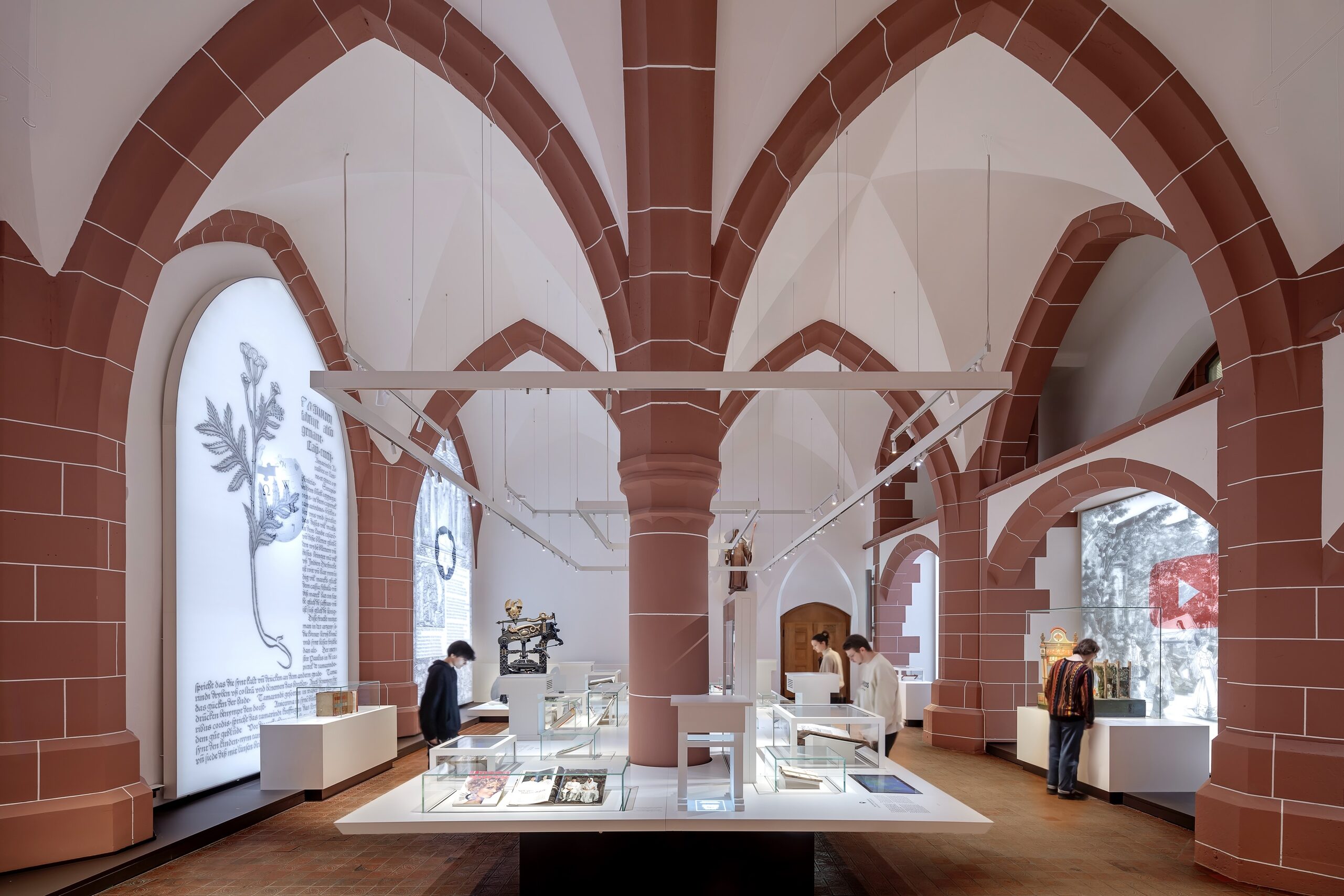
Since its founding by the citizens of Mainz in 1900, the Gutenberg Museum has been committed to serving the public. The museum's diverse municipal, national, and international work would not be possible without financial support from the city. However, private individuals, associations, professional societies, and foundations also contribute to the successful continuation of the outstanding work of the "World Museum of Printing Art."
Civic engagement
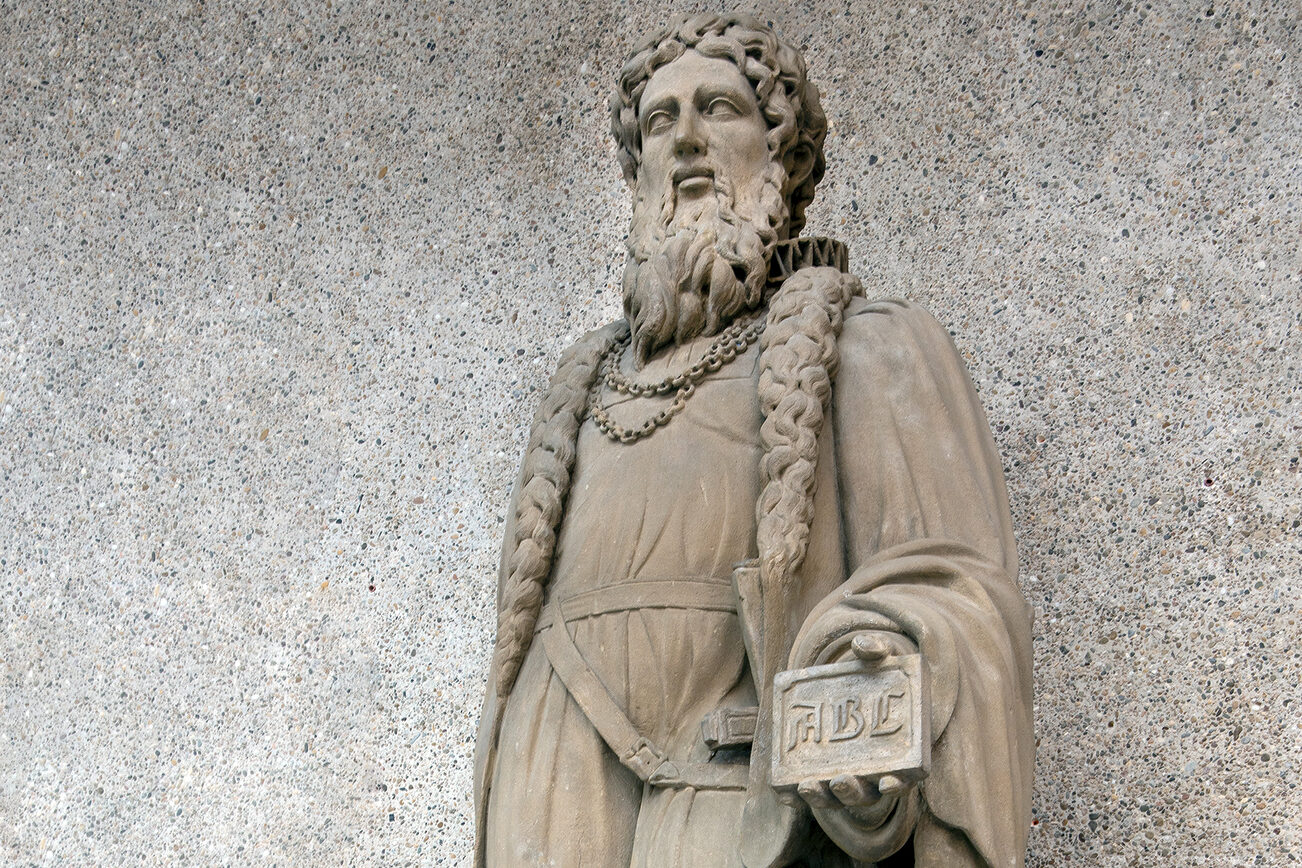
Volunteering is an integral part of German society. Through their voluntary work, citizens express their commitment not only to a community, but also to initiatives, associations, and institutions. The importance of the Gutenberg Museum as a place of knowledge, research, and dialogue, but also as a place of remembrance and a laboratory that invites its visitors to experiment, is evident in the large number of volunteers who work in the museum, especially in its print shop. Their voluntary work shows the significance of the Gutenberg Museum in Mainz society and far beyond.
Donations and gifts
Since the museum was founded, the collection has grown steadily thanks to donations and gifts. These contributions include donations in kind, which support and complement the museum's collection mission, as well as financial donations from institutions and private individuals, which support specific areas of the Gutenberg Museum's work (purchases, exhibitions, restoration, etc.).
Would you like to support the Gutenberg Museum with a donation? We look forward to hearing from you!
Associations, societies and foundations
The Gutenberg Museum is actively supported by associations, societies, and foundations that are committed to the museum's work.
International Gutenberg Society e.V.
Founded in 1901, the Gutenberg Society is one of the most traditional scientific societies in Mainz. Together with the city of Mainz and alternating annually with the printing city of Leipzig, it awards the Gutenberg Prize, worth €10,000, for outstanding scientific, technical, or artistic achievements in the field of printing. It also provides conceptual and financial support to the Gutenberg Museum.
Gutenberg Foundation
The foundation, established in 2009 by the Förderverein Gutenberg e.V. (1994-2011), strives to provide sustainable financial support for the museum, for example through sales in the museum shops.
Friends of Gutenberg
Founded in 2018, the Friends of Gutenberg association brings together people who actively support the Gutenberg Museum. Members of the association also receive discounts and special offers at the museum.
Mainz impulse
With the digitization of printing, knowledge of traditional printing techniques is increasingly being lost. Raising awareness for the preservation of Gutenberg's technology and securing technical expertise for future generations are the goals of the "Mainzer Impuls" (Mainz Impulse).
On September 30, 2020, the "Mainzer Impuls," initiated by the former director of the Gutenberg Museum, Dr. Annette Ludwig, was signed by the then mayor of the state capital Mainz, Michael Ebling, and the head of the department of construction and culture, Marianne Grosse. This anchored the appeal in cultural policy.

Your vote counts!
If you would also like to add your voice to the campaign to preserve Gutenberg's technology, please send us an email stating your name and, if applicable, the name of the institution you represent, to mainzer-impulsstadt.mainzde.
Privacy policy
By supporting the "Mainzer Impuls," you agree to the publication of the following personal data on the website of the Gutenberg Museum Mainz:
• First and last name
• Occupation or institution for which you work
• Location Privacy policy
List of signatories
The initiators
Dr. Annette Ludwig,
former director of the Gutenberg Museum
Michael Ebling, former
mayor of the state capital Mainz
Marianne Grosse
Head of Cultural Affairs for the state capital of Mainz
The signatories
Dr. Arne Ackermann
, Director of the Munich City Library, Munich
Dr. Dorothee Ader
, Museum Director, Klingspor Museum, Offenbach am Main
Ralph Aepler,
Chairman of the Board, Pirckheimer-Gesellschaft e.V.
Alejandro Agustín Cano
, London (United Kingdom)
Alejandro Agustín Nogués
, Valencia (Spain)
Dorothea Allmeritter
, Director of the “Joseph Meyer” City and County Library, Hildburghausen
Werner Andrä
, President of the Working Group on School Printing (AKS) e.V., Tübingen
Barbara Arndt
, Fietz Translations, Oldenburg i. O.
Sabine
Arndt, City and Regional Library, Erfurt
Juan J. Arrausi, Ph.D.,
Academic Coordinator and Professor, ELISAVA, Escuela Universitaria de Diseño e Ingeniería de Barcelona (Spain)
Jesús Arres Flores
(Spain)
Dr. Sylvia
Asmus, Director of the German Exile Archive 1933–1945, German National Library, Frankfurt am Main
Dr. Vlad Atanasiu
, Computer Scientist and Paleographer, University of Bern, Bern (Switzerland)
Andreu Balius
, Typerepublic, Barcelona (Spain)
Dr. Julia Bangerte
, former Executive Director of the International Gutenberg Society in Mainz e.V.
Cornelia
Bärsch-Kämmerer, tour guide for the city of Mainz
Franca Bartholomäi
, Artist, 2016 Mainz City Printer, Halle an der Saale
Andrea Becker
, Public Relations Officer, State Chancellery of Mainz
Dr. Uwe Beckmann
, Director of the LWL Open-Air Museum Hagen – Westphalian State Museum of Crafts and Technology, Hagen
Dr. Dörte Beier
, Director of the Schleswig City Museum
Barbara Beisinghoff
, Artist, Beisinghoff Studio House, Diemelstadt-Rhoden
Joseph Belletante
, Director of the Musée de l’imprimerie et de la Communication graphique, Lyon (France)
Heike Berl
, Artist and IAPMA Archive Keeper (International Association of Hand Papermakers and Paper Artists), Dresden
Gudrun
Beutel, Mainz
Manfred Blieffert
Visual Artist, Printer, Osnabrück
Susanne Bittner
, Oberursel
Anne Blicke
, Gutenberg Foundation, Mainz
Norbert Bode
, book printer, Kelkheim
Dr. Gilles Bodin
, son of a printer (typographer and linotype operator), bibliophile, president of the Société d’Histoire et d’Archéologie de Senlis (France)
Herbert Böhm
, Editor, Hamburg
Tabea Borchardt
, independent artist and art educator, Triebfeder artists’ collective, Essen
Elke Born
, Mainz-Kostheim
Joachim Breuninger
, Board Member and Director of the German Museum of Technology Foundation, Berlin
Petra
Brickmann, book conservator, Palatinate State Library, Speyer
Ricardo Brontons Castello
(Spain)
Dr. Hedwig Brüchert
, Mainz City History Museum
Michael Brust
, Managing Director/Owner, Kammerlander Druck OHG, Kempten (Allgäu)
Federal Association of Visual Artists (BBK)
Monika Buniwer-Conradi
, Volunteer at the Gutenberg Shop (since 2009) / the Gutenberg Foundation (since its founding)
Marie-Luise Bursch
, Alzey
Carlos Campos
, Jaén (Spain)
Juan Castelló Mora
, Senator of the Senate of the Valencia Printing Museum (Spain)
Leopoldine Chazeaud
, artist, Mainz
Horst Ciechowski
, typesetter at the Gutenberg Museum’s print shop in Mainz
Yves Marit Chrzanowski
, printmaker, Halle (Saale)
Xavier Claverie-Rospide
, Aube musique ancienne, Troyes (France)
Dr. Claude D. Conter
, Director of the National Library of Luxembourg (Luxembourg)
Dr. Michael E.
Coridaß, Mainz
Sandra Debot
, Lyon (France)
Helmut Dedy
, Chief Executive Officer of the German Association of Cities
German Werkbund Rhineland-Palatinate e. V.
Christophe Didier
, National and University Library of Strasbourg, Strasbourg (France)
Die Betonisten – Initiative for the Promotion of
Postwar Architecture, Mainz
Dr. Georg Dietz
, Japico Dietz, Dresden
Prof. Dr. Wolfgang Dobras
, Chief Archivist, City Archives, State Capital of Mainz
Renate Donat
, Bad Vilbel
Bernhard Dorn
, Drucken & Lernen Educational Materials Publisher, Raunheim
Bernadette Dotzauer
, Biblis
Hans Dubronner
, Master Typesetter, Bruchsal
Franz Dudenhöffer
, Director of the Speyer City Art Gallery
Andreas Düspohl
, Director of the International Newspaper Museum of the City of Aachen
Oliver Ebben
Dr. Katharina
Ebrecht, Director of the University Library, Reutlingen University
Andreas Ecarnot
, Museum Educator, Head of the Printing Shop at the Gutenberg Museum in Mainz (2011–2013)
Volker Eckebrecht
, Book Printer, Magdeburg
Hergen Eckoldt
, cross-effect, Eckoldt GmbH & Co. KG, Ingelheim
Alexander Elspas
, Büchergilde Gutenberg Publishing Cooperative eG, Frankfurt am Main
Erich Elstermann
, Oberhausen
Beate Emde
, independent visual artist, Neustadt/Weinstraße
Maria Erbach
, MIS Viernheim, Stockstadt
Ulrike Eschwei
, typesetter, former director of studies, Printing and Media Technology at the Gutenberg School in Frankfurt am Main
Jeannette Faure
, freelance journalist, Frankfurt am Main
Dr. Onno Feenders
, Emden
Marlène Fezay
, Saint-Chamond (France)
Enrique Fink Hurtado
, President of the Asociación de Amigos del Museo de la Imprenta de Valencia. Museum Senate, Valencia (Spain)
Katharina Fischborn
Artist, 2006 City Printer of Mainz, Langenlonsheim
Angelika Flaig
, Bösdorf
Hartmut Flothmann
, Idstein
Friends of Local History and the Old Provost’s Residence in Kruft, Inc.
Johannes
Follmer, Homburg Paper Manufactory and Homburg Paper Mill, Homburg
Friedrich Forssman
, typographer and exhibition designer, Kassel
Dr. Jürgen Franssen
, President of the Association for the Black Arts, Heidelberg
Heinz and Gerlinde Freiberg
, Edition Freiberg, Dresden
Anja Fröhlich
, Director of the Crafts Collection at the Deggendorf Municipal Museums
Pascal Fulacher
, Director of the Atelier du Livre d’art et de l’Estampe, Imprimerie Nationale, Flers-en-Escrebieux (France) (through September 2021)
Prof. Dr. Nina
Gallion, Professor of Late Medieval History and Comparative Regional History, Johannes Gutenberg University Mainz
Javier García del Olmo
Designer, calligrapher, author, and editor; Senator of the Senado del Museo de la Imprenta de Valencia, Madrid (Spain)
Yiannis Garedakis
Museum of Typography by Yiannis & Eleni Garedakis, Chania, Crete (Greece)
Helmut Garritzmann
, Pulheim-Geyen
Julian Garritzmann
, Frankfurt am Main
Gabriel de Gaudi
, Pesaro (Italy)
Charlotte Gauvin
, graphic designer, Studio Système Sensible, Eurre, Drôme (France)
Silke Geck
, Frankfurt am Main
Tobias Gellscheid
, 2018 City Printer of Mainz, Halle an der Saale
Dr. Annette
Gerlach, Director of the Rhineland-Palatinate State Library Center, Koblenz
Burkhardtsdorf History and Art Association, Burkhardtsdorf Printing Museum
Peter Gilles
, Mainz
Dr. Thomas Glöß
, Chair of the Leipzig Bibliophiles’ Evening Association
Dr. Anett Göthe
, Curator, Gutenberg Museum, Mainz
Dr. Helmut Gold, Director
of the Museum of Communication in Frankfurt am Main and Curator of the Museum Foundation for Post and Telecommunications
Rudolf Paulus Gorbach
, “Intensive Typography” Seminar
Christel Greiser-Garritzmann
, Pulheim
Christian Gruber
BiBi am See, Wulfen Community and School Media Library, Dorsten
Ralf Grüner
, DTP Assistant, Auerbach/Bergstraße
Reinhard Grüner, collector
of modern artist’s books and illustrated books dating back to the 18th century, Munich
Jürgen Grünitz
, owner of the Fritz Classen printing company, Düsseldorf
Maud Guerche Graphic
designer, Sélestat (France)
Aránzazu Guerola Inza
, President of the Sociedad Bibliográfica Valenciana; Jerónima Galés, Secretary of the Asociación de Amigos del Museo de la Imprenta de Valencia. Museo Senate, Valencia (Spain)
Anne Guillou
, Director of the Médiathèque Jean-Macé (Metz-Borny), Bibliothèques-Médiathèques de Metz (France)
Dominique Guinet
, Sainte-Foy-lès-Lyon (France)
Dr. Mechthild Haas
, Director of the Graphic Arts Collection, including the Department of Type Casting, Typesetting, and Printing Techniques, at the Hessian State Museum, Darmstadt
Thomas
Haas, Executive Director of the Weiss-Druck Foundation, Monschau
Sophie Haesen
, Translator, Gamila Verlag, Vieux Ferrette (France)
Jürgen Hagenkötter
, Museum on Tour, Lütau
Magdalene
Hanke-Basfeld, Author and Illustrator, Hamburg
Volker Hans
, FDP-Finthen, Member of the Finance and Public Participation Committee of the Mainz City Council
Dr. Michael Hansen
, Director of the University Library of Mainz
Cornelia Hartkopf
, printmaker, printmaking workshop at the Women’s Museum, Bonn
Jan Hartmann
, BBK Frankfurt, Zuzenhausen
Susanne Hartmann
, Communication Designer, Mainz
Wolfgang Hartmann
, President of Bauer Types, Barcelona (Spain)
Eberhard Hartwig
, Printmaking Studio, Berlin
Josef Haslinger
, Writer, Vienna (Austria)
Sandra Heinz
, Artist, 2012 Mainz City Printer, Mainz
Aniko Heinze
, Bischofswerda City Library
Manfred Heiting
, The Institute of Art Research, Amsterdam (Netherlands)
Philipp Hennevogl
, Linocut Artist, Berlin
Dr. Andreas Henning
, Director, Museum Wiesbaden – Hessian State Museum of Art and Nature
Christian Herfurth,
Mayor of the university town of Idstein
Katharina Hesse
, Executive Director of the Stiftung Buchkunst
Wichard von der Heyden
, Mainz
Dr. Karin Hilbers
, printmaker, Jasdorf
Wolfgang Höfener
, Historical Print Workshop “Offizin Schloss Horst,” Gelsenkirchen
Florian Holzing,
Koblenz
Dr. Sabine Homilius
, Director of the City Library, Frankfurt am Main
Nikolas Hönig
Illustrator and graphic designer, Essenheim
Jesús Huguet i Pascual
Executive Secretary of the Consell Valencia de Cultura, Valencia (Spain)
Seungjae Huh
, Consul General of the Republic of Korea, Embassy of the Republic of Korea, Bonn Branch Office
Martina Illner
, Press and Public Relations, Gutenberg Museum, Mainz
Carolin Immig
, Oberhausen
Chamber of Industry and Commerce for Rheinhessen
Peter Hähner (President), Günter Jertz (Chief Executive Officer)
Institute for Historical Regional Studies at the University of Mainz e.V.
Dr. Holger Jacob-Friesen
, Head of the Collections and Research Department and the Old Masters Painting Gallery, State Art Museum Karlsruhe
Dr. Stephanie Jacobs Director
of the German Book and Writing Museum, German National Library, Leipzig
Christian Jäger
Illustration and Graphic Design
Susanne Jaeger
, Mainz
Nikola Jaensch Visual
artist and adjunct lecturer in figure drawing, Mainz Academy of Fine Arts
Monika Jakobs
, Luxembourg Museum of Printing and Playing Cards, Grevenmacher (Luxembourg)
Dr. Skadi
Jennicke, Deputy Mayor for Culture of the City of Leipzig
H.E. Dr. Bum-goo Jong
, Ambassador of the Republic of Korea
Andrea
Joosten, Librarian, Emmerich am Rhein
Julia Kahl
CEO / Publisher / Editor, Graphic Designer, SLANTED PUBLISHERS
Regina Kania
, Librarian, Mainz University Library and Gutenberg Museum
Abbas Khider
, Writer, Berlin
Maximilian Kiefer
, Chair, Student Council of Mainz University of Applied Sciences (K.d.ö.R.), General Student Committee (AStA)
Adi Kiescher
, Mainz
Yeon-in Kim
, Director General of the Cheongju Early Printing Museum, Cheongju (Republic of Korea)
Jürgen Kipp
, Organizer of the Mini-Press Fair, Gutenberg Museum, Mainz
Renate Knigge-Tesche, M.A.
, political scientist, Mainz
Stephanie Koch
, Director of the Weinheim City Library
Ludger Maria Kochinke
, Bookbinding Studio . Kochinke, Mainz
Iris Kockelbergh
, Director of the Plantin-Moretus Museum, Antwerp (Belgium)
Johannes Kohl
, Spokesperson for the Mainz Citizens’ Initiative for Gutenberg, Mainz
Markus
Kohz, Member of the Board of Directors of the International Gutenberg Society in Mainz e.V.
Siegfried Kolsch
, Engineer (Dipl.-Ing.) and Master Printer (ret.)
Dr. Judith König, Chair
of the Mainz Tour Guide Association
Teresa and Dr. Erwin Kreim
, Founders and Patrons of the “Briefsteller Collection” at the Gutenberg Museum; authors of several publications on Johannes Gutenberg, Mainz
Karl Kretschmer
, President of the association “Die Druckwerkstatt Mosbach e.V.”
Prof. Martin Maria Krüger
, President of the German Music Council
Ruth Kühn
, Mainz
Karin Kuhn
, Director of the Aschaffenburg Court Library
Patrick Kunkel
, President of the “Burg-Verein e.V.” in Eltville am Rhein
Dr. Eberhard Kusber
, Director of the Erfurt City and Regional Library
Anke Lambeck
SMS group GmbH, Technical Information, Hilchenbach
Annette Lang-Edwards
Book Restorer, Gutenberg Museum, Mainz
Prof. Dr. Ralf Lankau Professor
of Digital Design, Media Design, and Media Studies, grafik.werkstatt, print.screen.digital, Faculty of Media, Offenburg University of Applied Sciences
Gert Laufenberg Typesetter
and media designer, member of the Friends of the Museum of Work, volunteer at the typesetting shop of the Museum of Work in Hamburg-Barmbek
Barbara Laufs Mainz
Dr. Manfred Laufs,
Mainz
Alfredo Lazo Molina Senator
of the Senate of the Museo de la Imprenta de Valencia, Valencia (Spain)
Stefan Ledergerber
, Director of the Gutenberg Museum – Swiss Museum of the Graphic Arts, Fribourg in the Grisons (Switzerland)
Dooyoung Lee
, Consul General of the Republic of Korea, Embassy of the Republic of Korea, Bonn Branch Office
Gisela Lehner
, Library Director, Eichenau Public Library
Martin Wilhelm
LeidigLadenburg
Torsten Leupold
, Grafikwerkstatt Dresden, Dresden Office for Culture and Historic Preservation
Myriam Lezier
, Artist and Craftswoman, Engraving, Auxerre (France)
Margarete Lindau
, Board Member of BBK Mannheim, Head of the Print Workshop at the Department of Design, Darmstadt University of Applied Sciences, Mannheim
Gabriele Lindinger
, Editor of KUNSTZEITUNG
Gabriele Lindner
, Director of the Nicolas Born Library in Hitzacker
Sylke and Michael Linke
, Hoya Printing Museum
Prof. Dr. Maria Linsmann-Dege
, Curator, Gutenberg Museum, Mainz
Juan Luis Llop Bayo
, Valencia (Spain)
Juanjo López
Familia Plómez, Madrid (Spain)
Melissa Lotz
, Mainz
Dr. Bernhard Lübbers
, Director of the Regensburg State Library
Prof. Dr. Hartwig Lüdtke
, Director of the TECHNOSEUM State Museum of Technology and Work in Mannheim
Victor Ludwig
, Student, Ruhr University Bochum
Jana Madle-Elmerhaus
, Communication Designer and Typographer, Type Setter in Training and on TypoWalz
Roman Mangold
, Retired Director of the School Board, Arbeitskreis Schuldruckerei (AKS) e.V., Reutlingen
Christian Mantsch
, Head of the Library, Protestant University of Applied Sciences Nuremberg
Julián Marcelo
Valencia (Spain)
Peter Marggraf
Sculptor, printer, and bookbinder, Bordenau/Venice (Italy)
Francisco José Marín Perellón
Imprenta Municipal – Artes del libro, Madrid (Spain)
Dr. Alan Marshall Former
Director of the Musée de l’imprimerie et de la communication graphique, Lyon; Board Member of the Association of European Printing Museums; Vice President of the International Association of Printing Museums, Lyon (France)
Yurema Martín Antón
, Gráficas Almeida, Madrid (Spain)
José Manuel Martín Lanza
, Gráficas Almeida, Madrid (Spain)
Antoni Martínez Revert
, Xàtiva (Spain)
Céline Martinez Teste
Graphic Designer, Saint-Étienne (France)
Gudrun Lydia
Martini, Certified Translator, Language Instructor, Author, Artist, Small-Scale Publisher, Owner of the ARTS MARTINI ACADEMY for Languages, Art, and Culture, Berlin
Katharina Massing
, Exhibition Assistant, Gutenberg Museum, Mainz
Prof. Klimis Mastoridis, PhD, FISTD, FIP3
Director of the Institute for the Study of Typography and Visual Communication (ISTVC), Professor of Typography & Graphic Communication, University of Nicosia (Cyprus)
Daniel Matoses
, CEO, Impresum, Valencia (Spain)
Olivier Mayençon
, typographer, Trévoux (France)
Monsignor Klaus Mayer
, Honorary Citizen of the State Capital of Mainz
Prof. Gerhard Meerwein
, Mainz
Karl Michael Meinecke
, typesetter, Dipl.-Ing. (HdM), bvdm Technik + Forschung (1980–2017), Member of the Board of the International Gutenberg Society, Aystetten
Jörg
Meißner, Curator, Gutenberg Museum Mainz (2017–2021)
Clemens Meyer, writer
, Leipzig
Carl Middleton
, Studio B, Milverton (United Kingdom)
Frank Mittelbach
, Technical Lead, LaTeX Project, Mainz
Jesús Morentin
, BunkerType Typography Printshop, Barcelona (Spain)
Oriol Moret Viñals
Lecturer, Coordinator of the Letterpress Workshop, Faculty of Fine Arts, University of Barcelona (Spain)
Dr. Dietrich Müller
, Bad Kreuznach
Prof. Dr. Rita Müller
, Director of the Museum of Work, Hamburg Historical Museums Foundation
Prof. Dr. Pia Müller-Tamm
, Director of the Staatliche Kunsthalle Karlsruhe
Dr. Roger Münch
, Director of the German Newspaper Museum, Wadgassen
Klaus Münchschwander
, Dreieich
Museum of Literature on the Upper Rhine, Karlsruhe
Prof. Dr. Isabel Naegele
, Professor of Typography, Director of the Gutenberg Design Lab Institute, Mainz University of Applied Sciences
Monika Neff
, Calligrapher, Bad Homburg
Dr. Harry Neß
, Chair of the International Working Group for the History of Printing and Media
Harro Neuhardt
, Master of the Gautsch Ceremony for the State Capital of Mainz
Heinz Noack,
typesetter at the Gutenberg Museum’s print shop in Mainz
Lukas Nübling
, Executive Director of the Rhineland-Palatinate Cultural Office
Prof. Dr. Andrea Pataki-Hundt
, Manuscripts, Graphic Arts, Photography, and Illumination, CICS – Cologne Institute of Conservation Sciences, Cologne University of Applied Sciences
Francisco de Paula Martínez Vela
, Oficina Tipográfica, Granada (Spain)
Reinhard Pfnorr
, Printing Shop, Niddaer Heimatmuseum e.V.
Matthias Philipp
, *Monopol*—Magazine for Art and Life
Silke Philipps-Deters
, Project Manager, descom – Design Forum Rhineland-Palatinate
Prof. Dr. Eckhart Pick
, Mainz
Katharina Pieper
, Founder of the association “Stiftung Schriftkultur e. V.” and the Museum of Calligraphy and Handwriting, Homburg/Saar
Albert Pitarch Navarro
, Member of the Sociedad Bibliográfica Valenciana Jerónima Galés, Valencia (Spain)
Christin Prinz
, Jena
Françoise Puy
, Lyon (France)
Dirk Quasten
, founder of the “Das VIELFALT” project, Dreieich
Wolfgang Raab
, master printer and typesetter; honorary senior master of the former Guild of the Graphic Arts in Trier; former board member of the State Printing Association, Neustadt
Klaus Raasch
, Publisher and organizer of “BuchDruckKunst”—a fair for exquisite printed works in Hamburg
Martin Rabanus
, Chair of the German Adult Education Association (Deutscher Volkshochschul-Verband e. V.)
Ute Recklies
, Certified Librarian (Dipl.-Bibl.WB), Karlsruhe
Johannes Reisinger-Wansch
, Engineer, Primelzahl GmbH, Linz
Ulla Reske
, Research Associate, Gutenberg Museum, Mainz
Fermín de los Reyes Gómez
, University Professor and Academic Secretary, Faculty of Documentation Sciences, Complutense University of Madrid (Spain)
Dr. Dan Reynolds
, Lecturer for Special Assignments, Typography and DTP, Niederrhein University of Applied Sciences
José María Ribagorda
(Spain)
Dr. Sandra Richter
, Director of the German Literature Archive in Marbach
Dr. Susanne Richter
, Director of the Museum of Printing Arts, Leipzig
Reinhard
Riedel, President of the Erlebniswerkstatt Buchdruck-Museum Soltau e. V.
Sibylle von Roesgen, M.A., dwb
Art Historian I Cultural Manager, Mainz
Dr. Dietrich Rost
, Nuremberg
Claire Royer
, Computer Scientist, Lyon (France)
Andrea Rudolph
, Chair of the BildDruckPapier Forum, Dresden
Manolo Sanchis
, Valencia (Spain)
Karin Saur
, Staff Member at the Gutenberg Museum’s Print Shop, Mainz
Prof. Dr. h.c. mult. Klaus G. Saur
, Munich
Dolores Schabio
, employee at the Gutenberg Museum’s print shop in Mainz
Dr. Dorit Schäfer
, Director of the Kupferstichkabinett, Staatliche Kunsthalle Karlsruhe
Judith Schalansky
, writer and book designer
Sylvia Schaumburg-Hillen
, Neuwied
Sven Schiefelbein
, Director of the Büdelsdorf Public Library
Erika Schiller
, Member of the School Printing Workshop Working Group (AKS), Esslingen
Dr. Daniel Schlögl
, Director of the Library at the Institute for Contemporary History, Munich-Berlin
Karlheinz Schmid
, Editor of KUNSTZEITUNG
Eberhard Schmidt
, Hofheim am Taunus
Thomas Schmidt
, Project Manager, Gutenberg Museum, Mainz (2020–2021)
Prof. Dr. Hansgeorg Schmidt-Bergmann
, Professor of Modern German Literature at KIT Karlsruhe and Director of the Museum of Literature on the Upper Rhine, Karlsruhe
Bertram Schmidt-Friderichs
, German Liaison Chairman of the Type Directors Club of New York and Managing Director of Hermann Schmidt Publishers
Daniela Schmitt
, State Secretary in the Ministry of Economics, Transportation, Agriculture, and Viticulture of the State of Rhineland-Palatinate (until 2021)
Dr. Rainer Schmitt
, Music and Cultural Tours, Wiesbaden
Bernd Schoepe
, Berlin
Martin
Schröder, Duisburg
Dr. André Schüller-Zwierlein
, Chief Librarian of the Regensburg University Library
Christel Schulte
, Staff Member at the Gutenberg Museum Print Shop in Mainz
Marie-Luise Schultz, Museum
Educator at the Printing Workshop of the Junges Museum in Frankfurt (until 2018)
Dr. Sandra Schultz
, Curator, Gutenberg Museum, Mainz
Ingo Schulze
, Writer, Berlin
Eckehart SchumacherGebler
, Haag-Drugulin Pharmacy, Dresden
Heribert Schwalge
, Bornheim
Christa Schwarztrauber
, Master Typesetter, Fliegenkopf Hand-Setting Workshop, Munich
Paul Schweitzer-Martin
Research Associate at SFB 933 “Material Text Cultures” at Heidelberg University
Jürgen Seeger
, The Movable Type – Hameln Printing Museum, Inc.
Dr. Gero Seelig
, Curator, State Museum of Schwerin
Hildegard Seidel
, Director of the “Rudolf Hagelstange” City Library, Nordhausen
Jordi M. Sempere Vicedo
(Spain)
Johannes Seubert
, Engineer, Frankfurt am Main
Dr. Jochen Skupin
, Osterholz-Scharmbeck
Dr. Joaquín Solana Oliver
, Member of the Club de Gráficos Eméritos, Barcelona (Spain)
Prof. Tina Solt
, Professor of Visual Arts Practice, Institute for Art History and Fine Arts, Director of the Institute’s Printmaking Workshop, University of Koblenz-Landau, Landau Campus
Dr. Stefan Soltek Director
of the Klingspor Museum in Offenbach and Board Member of the AEPM
Brigitte Specht
Press and Public Relations, Gutenberg Museum, Mainz
Michael Sprengart
Creative Director of Art, Mainz
Gerhard Steidl
Printer and Publisher, Göttingen
Annelore Stein
, Certified Social Educator, Caritasverband Mainz e. V., Mainz-Hechtsheim (until Nov. 2021)
Robert Steinberger
Graphic Designer/Illustrator, Oberhausen
Eva Steinberger-Theisen
, Architect (Dipl. Ing.), Kruft
Manfred Steinmann
, Wissen
Anja Stengel
Kronau
Mainz Shorthand Association 1862 e.V., Mainz-Lerchenberg
Werner Busch (President), Inge Hupf (Vice President)
Peter Stephan
, Lithographer and Director of the Dresden Graphic Arts Workshop, Dresden Office for Culture and Historic Preservation
Dr. Monika Storm
, Rhineland-Palatinate State Parliament Archives, Mainz
Adel Ibrahim Sudany
, Lecturer in Calligraphy, Goethe University Frankfurt am Main
Dan Tait-Jamieson
, Secretary and Treasurer of The Printing Museum, Upper Hutt (New Zealand), and President of the International Association of Printing Museums
Immanuel Tanneberger
, Art Teacher, Theißtalschule, Niedernhausen
Josef Thienen
, typesetter (lead), book and offset printer, Bad Honnef
Rolf
Thienen, Bad Honnef
Guy Tinsel
, President of the Espace Européen Gutenberg, Strasbourg (France)
Dr. Regula Venske
, President of the German PEN Center
Sebastian Vernetta Barrera
(Spain)
Claire Victor
, University Library, Lyon (France)
Jean-Pierre Villard
, President of the Association d’Encre & de Plomb, Chavannes-près-Renens (France)
Wolfgang Vogel, slowtype Studio
, Ludwigshafen
Inge Vogler-von Zons
Ludwig Voss Executive
Director of the Federal Association of German Bookbinders e.V.
Josef Wagner
, Master of Theology, retired publisher, Ingelheim
Petra Wagner
, Wunstorf
Prof. Valy Wahl
(dwb), Graphic Design – Figurative and Experimental Project Design, Mainz
Katharina Walter
, cultural and media studies scholar, Potsdam
Andreas Weber
, Chairman & CEO of FISS, the Friends of the International Senefelder Foundation e.V., Frankfurt am Main
Elli Weishaupt
, Artist, Mainz-Kostheim
Berthold Weiß
, Deputy Director of the Fulda University and State Library
Uli Weiß
, Graphic Designer and Managing Director, magma design studio, Karlsruhe
Prof. Dr. Susanne Weissman
, President of Mainz University of Applied Sciences
Dr. Annika Wellmann
Curator and media historian, Hanover
Silvia Werfel, M.A.
, printing historian and journalist, Wiesbaden
Andreas Wiese
State Division Head, ver.di Rhineland-Palatinate-Saarland Regional District, Telecommunications / Information Technology / Data Processing Division
Karin Wiertz
, Artist, Maastricht (Netherlands)
Hermann Wiest
, FDP Parliamentary Group, Mainz
Roman Wilhelm
, Typography and Visual Communication Lab, Faculty of Design, Berlin University of the Arts
Sven Winterstein
, Owner of Letterjazz Print Studio, Essen
Klaus Wiskow
, Hanau
Marieke de Wit
, graphic designer and letterpress printer, Amsterdam (Netherlands)
Werner Worm
, Owner, ww medienservice, Darmstadt
Carola Zabler
, Director of the Östringen Public Library
Hans Zink
, typesetter and machine typesetter, Ludwigsburg
Philippe Zirn
, Proofreader (Print), Louannec (France)
Johan de Zoete
, expert in reproduction techniques, conservator at the Museum Enschedé in Haarlem (until 2016), Utrecht (Netherlands)
Voices on the Mainz Impulse
"Amid all the excitement surrounding the rapid pace of digitalization, we shouldn’t forget our roots—without them, we wouldn’t be where we are today. My hope and dream is that the analog and digital worlds will develop and complement each other on equal footing. Applied to books, this means that the paper book—with its distinctive aesthetic and requiring no technical aids—e-books—with their quick and convenient availability (provided the technology works)—and the instant information from the internet should all be valued equally. For this reason, I hereby sign the “Mainz Initiative.”
Dorothea Allmeritter, Director of the “Joseph Meyer” City and County Library in Hildburghausen
“When it comes to speed, digital technologies have won the day. But, to paraphrase Volker Pispers, one might ask: ‘Where are we headed?’ What good does it do us if everything keeps getting faster and faster? Time is the most precious thing there is. Because it slips away inexorably and can neither be saved up nor turned back. Slowness is pure luxury, but in the face of demands for ever-greater efficiency and acceleration, it is also pure provocation. This makes analog printing techniques—which are many times slower than their digital counterparts—both precious and subversive.
The speed at which digitization is advancing—or rather, is being “forced forward”—is increasingly overwhelming me. Perhaps you’ll shake your head and laugh at this admission. But perhaps I’m also speaking from your heart.
We’ve reached the point where technology no longer makes our lives easier but dominates them by taking up more and more of our time. For me, woodcut printing means slowing down—a word that, tellingly, my electronic device flags as incorrect or unknown. And for me, slowing down is a way to enjoy life—and a form of resistance.”
Franca Bartholomäi, Mainz City Printer 2016/17
"The LWL Open-Air Museum in Hagen—the Westphalian State Museum of Crafts and Technology—features, in addition to numerous other historical crafts and commercial enterprises, an extensive and very popular ‘Printing and Paper’ section with demonstration workshops on ‘paper making,’ "Typesetting," and "Printing." We recognize the great significance traditional printing techniques have held for centuries, but also their fascination for today’s visitors. This heritage and the enthusiasm it inspires must be preserved.”
Dr. Uwe Beckmann, Director of the LWL Open-Air Museum Hagen – Westphalian State Museum of Crafts and Technology
“As Mainz’s city printer, I feel a connection to Mainz, the Gutenberg Museum, and your initiative, Dr. Ludwig. The text for my artist’s book *Die wilden Schwäne* was printed at the print shop. In Darmstadt, I founded “Druckkunst grenzenlos” (Printmaking Without Borders), and at the Beisinghoff Studio House, sixteen international female artists worked in my etching workshop and letterpress workshop.”
Barbara Beisinghoff, Artist, Beisinghoff Studio House, Diemelstadt-Rhoden
“As you said, we believe it is essential to preserve the know-how and technologies introduced by Gutenberg in Europe, and for my part, I fully support your investment and your professional commitment to defending this tangible and intangible cultural heritage, which lies at the foundation of European culture and at the foundation of its humanism.”
Joseph Belletante, Director of the Musée de l’imprimerie et de la Communication graphique, Lyon (France)
"The digital media revolution, which promotes the dissemination of books, encourages reading, and contributes to the expansion of knowledge much as the printing revolution once did, cannot and should not obscure the enduring significance of book printing. To me, as the head of a library with heritage collections, this historical knowledge seems indispensable to understanding the cultural practice of reading. Furthermore, I am deeply convinced that historical technologies remain appealing, including for the realization of contemporary projects in the artistic and craft fields, which I would be reluctant to do without. Knowledge of media history requires historical depth and a vibrant art of printing—whether it is practiced in vocational and higher education institutions, showcased in museums, utilized by artists, or admired by those with an interest in the field. That is why I support the Mainz Initiative with conviction and emphasis (to use that word in this context): Libraries remain vibrant when they strengthen awareness of the cultural practice of the art of printing and expand knowledge of one of the most significant cultural achievements.”
Dr. Claude D. Conter, Director of the National Library of Luxembourg (Luxembourg)
"A world without books is unimaginable. The printing press has given people free access to information. Browsing through books, acquiring knowledge, and questioning things are essential pillars of democratic participation. Today, new information from the world of the internet reaches us every minute. Knowledge is constantly being renewed, but this also makes it short-lived. Books, however, endure. It is our shared responsibility to preserve the origins and craft of book printing.”
Helmut Dedy, Chief Executive Officer of the German Association of Cities
“The initiative strikes me as highly interesting (if not absolutely necessary), and I will sign the Mainz Initiative with full conviction—as a research associate at a major European library, as the founder and editor of a journal that is published simultaneously (and to date) in print and online, and not least as a resident of the other ‘Gutenberg City,’ Strasbourg. The idea of an ‘international Noah’s Ark for Gutenberg’s technology’ also strikes me as very promising.”
Christophe Didier, Bibliothèque nationale et universitaire de Strasbourg, Strasbourg (France)
“We can only appreciate things we understand. Against this backdrop, the histories of printing and paper face a very similar challenge. Today, we have largely lost our knowledge of these (historical) techniques—and with it, our appreciation for them and the demand for them. It is therefore our task to continually explain these (historical) techniques. Only in this way will they be remembered, and only then will there be a chance that they will continue to be used in the future."
Dr. Georg Dietz, Japico Dietz, Dresden
“I support this initiative because the fundamental significance of Gutenberg’s invention for the history of media and for the historical development toward modernity cannot be overstated.”
Andreas Düspohl, Director of the International Newspaper Museum of the City of
Aachen”As a book club and publishing house founded in 1924 by printers and typesetters in Leipzig, the preservation of the time-honored Gutenberg technique and the artisanal skills surrounding the “black art” is particularly close to our hearts. Since 2014, the Büchergilde has also been a cooperative. Its more than 1,500 members—who appreciate good, well-crafted books—are deeply committed to supporting the Mainz initiative.”
Alexander Elspas, Chairman of the Board of the Publishing Cooperative
“Today marks the opening of the international exhibition ‘KONSTRUKTIV.IST 4,’ curated by Erdem K. Köroğlu, in which I am represented with my traditional printmaking, unique letterpress prints, and digital works. It would be unthinkable if this wonderful, traditional technique—typography and books—had no future. Development can certainly move forward within the digital realm; that’s precisely how I’m currently active in the U.S. as well, including with letterpress printing. But we must not lose sight of the knowledge and skill involved—the preservation of tradition—and we must not let it be lost.”
Katharina Fischborn, artist, Mainz City Printer 2006, Langenlonsheim
"Gutenberg’s invention of the printing press sparked a media revolution that helped bring about a decisive breakthrough in the dissemination of knowledge. The invention spread far and wide and became a cultural heritage worth preserving.
Gutenberg’s book printing was so ingenious that his manual typesetting remained the state of the art in printing shops for 550 years. We also owe typography to Gutenberg. And yet, in the 21st century, we run the risk of forgetting Gutenberg’s legacy due to the digitization of all information.
As the “World Museum of the Art of Printing,” the Gutenberg Museum in Mainz—with its Gutenberg Library and print shop—ensures that Gutenberg’s work and its lasting impact are passed on to future generations.
Gutenberg’s invention of book printing is rooted in Mainz, which identifies itself as the “City of Gutenberg” thanks to his invention. In addition to the Gutenberg institutions, many friends of Gutenberg are active in the city. As the editor of the “Jour Fixe Büchlein” published by the International Gutenberg Society in Mainz e.V., I was able to document over 160 prominent figures from Mainz who, as an expression of their appreciation, volunteered to give presentations on Gutenberg’s legacy at the “Jour Fixe of Gutenberg’s
Friends.” Based on this experience, I support the Mainz initiative and hope that it will lead to the desired success.”
Hartmut Flothmann, Idstein
"In Homburg, paper is made and printed! The Homburg Paper Mill features original historic machines for water-powered paper production. In the mill’s annex, we operate a small printing workshop. With our paper-making demonstration area and occasional activities in our “typesetting shop” and “print shop,” we’re breathing new life into this ancient craft. Commissions in the “art of black and white” keep things lively within these historic walls. We recognize the great significance traditional printing techniques have held for centuries, yet paper had already quietly gained ground centuries before that. In Europe, paper was already in use—and was also being produced there—as early as the 12th century. Parchment (animal hides) was too costly and labor-intensive to produce, and supplies were limited. Starting in the 14th century, paper increasingly prevailed over parchment as a writing medium—it serves as a reliable medium for recording information—and its breakthrough began well before the invention of the printing press. We, too, are happy to share our fascination with paper and printing with today’s audience. We invite you all to help preserve this heritage and foster the enthusiasm it inspires through commissions and visits to the workshops and museums!”
Johannes Follmer, Homburger Papiermanufaktur and Homburger Papiermühle, Homburg
"As the director of the Atelier du Livre d’art et de l’Estampe, whose expertise and typographic heritage are well known, I can only support this initiative, which aligns with our efforts to preserve artisanal techniques that have become rare in the field of typography, at least in France. […] It is therefore with immense pleasure that we support your initiative and sign this ‘Impulse from Mainz,’ which we sincerely hope will mark a renaissance of trades that are now on the verge of disappearing but which have been so essential for centuries to the emergence and dissemination of human knowledge and learning.”
Pascal Fulacher, Director of the Atelier du Livre d’art et de l’Estampe, Imprimerie Nationale, Flers-en-Escrebieux (France) (until September 2021)
"With this letter, I would like to thank you for including the Museum of Typography in Chania in the ‘Mainz Impulse’ initiative. It would be an honor to be part of it, so I have already sent an email expressing our support, as we share the same concerns regarding the continued existence of one of humanity’s most important cultural achievements."
Yiannis Garedakis, Museum of Typography by Yiannis & Eleni Garedakis, Chania, Crete (Greece)
"I am extremely pleased that the Gutenberg Museum in Mainz is supporting Gutenberg’s invention in many countries through the ‘Mainzer Impuls’ program. I have been professionally involved with stamps, matrices, and the casting of lead type since 1957, first at the Bauer foundry and later at Fundición Tipográfica Neufville. Even though we’ve been digitizing typefaces at Bauer Types since 1998, we were still able to produce and sell hand-set typefaces until 2006 as one of the last commercially operating foundries. That is why it is important to me that this ancient craft does not fall into oblivion.”
Wolfgang Hartmann, Bauer Types, SL, Valencia (Spain)
“‘Even more than the lead in a shotgun, the lead in the type case has changed the world.’ And not only more profoundly, but above all in a more positive way. How much knowledge would we have already lost without letterpress printing! That is why knowledge of this unparalleled invention must be preserved! Thank you for this initiative!”
Aniko Heinze, Bischofswerda City Library
"As one of the last trained typesetters at the large graphic arts company A. Bagel in Düsseldorf (apprenticed in 1962), I must fully support the measures called for in the Mainz Initiative. The history and tradition of the art of printing—a craft requiring a keen eye and technical-industrial foresight that creates knowledge for all people, enabling us all to gain education and an understanding of culture—would not have been possible as we experience it today without Gutenberg’s technology, from movable type to press printing. His industrial and cultural legacy must be enshrined in UNESCO’s cultural heritage. The Gutenberg Museum in Mainz is the cradle of one of humanity’s most important inventions.”
Manfred Heiting, The Institute of Art Research, Amsterdam (Netherlands)
"My commitment to protecting Gutenberg’s legacy, which represents one of the greatest contributions to human history."
Jesús Huguet i Pascual, Executive Secretary of the Consell Valencia de Cultura, Valencia (Spain)
“Printing is a technology that may seem unnecessary in our digital age. However, it is part of our cultural heritage and can thus also have a decisive influence on our culture in the future. That is why I am pleased to support this initiative.”
Seungjae Huh, Consul General of the Republic of Korea, Embassy of the Republic of Korea, Bonn Branch
“It’s like after the invention of movable-type printing: Even today, the economy and society are undergoing a transformation driven by media technology that will revolutionize our lives. We are still learning from the legacy of the man of the millennium—and, starting from Mainz, we are following the Gutenberg Path into the future.”
Chamber of Industry and Commerce for Rheinhessen, Peter Hähner (President), Günter Jertz (Chief Executive Officer)
"The history of Leipzig as a city of books would have been told differently—or perhaps not at all—without Gutenberg’s invention. If this history were a book, many chapters detailing glorious times and painful turning points would reflect the city’s constant process of change, both past and present. Forward-looking change is only possible through the preservation of authenticity and the transmission of knowledge. That is why I support the preservation and transmission of the legacy of Gutenberg’s art of printing.”
Dr. Skadi Jennicke, Deputy Mayor for Culture of the City of Leipzig
“Preserving our cultural heritage is a vital task in the digital age. With this in mind, I strongly support the ‘Mainzer Impuls’ initiative.”
H.E. Dr. Bum-goo Jong, Ambassador of the Republic of Korea
“The transmission and dissemination of ideas—beyond mere information and the spoken word—on a broad scale and across all areas of life is the decisive cultural impetus. This was made possible by the invention of paper as a medium for writing, on the one hand, and the invention of printing with movable type, on the other. We all stand in this tradition, and we will continue to do so, even though other technologies have emerged over the centuries and will certainly continue to emerge. The invention of book printing is and remains a milestone in human cultural history. Commemorating this fact over the long term and permanently honoring these origins is, without a doubt, worthwhile and important.”
Dr. Eberhard Kusber, Director of the Erfurt City and Regional Library
"The invention of printing also laid the foundation for the printing and dissemination of sheet music and, thereby, for the establishment of music-making and participation in music within and for society."
Prof. Martin Maria Krüger, President of the German Music Council
"Book printing holds great significance for the Republic of Korea, for Germany, and for the entire world. Preserving this complex craft as an important cultural heritage for future generations is a priority. I would like to thank the Gutenberg Museum and the City of Mainz for this initiative.”
Dooyoung Lee, Consul General of the Republic of Korea, Embassy of the Republic of Korea, Bonn Branch
"As an avid reader, librarian, and director of the Eichenau Community Library, I am happy to support this important cause. Every day, I work with a wide variety of printed media and come into contact (unfortunately, rather distantly at the moment) with fellow book lovers. Although we also offer digital media, many readers assure me that these cannot replace printed books. I can only agree.”
Gisela Lehner, Library Director, Eichenau Community Library
“After all, through KUNSTZEITUNG and the KUNST information service, we’ve been demonstrating for decades that we’re genuinely concerned about the downsides of the digital revolution—that we, too, fear print might one day disappear entirely. In this way, we stand in solidarity with you and Gutenberg; we’re right there with you. "
Gabriele Lindinger and Karlheinz Schmid, Editors of KUNSTZEITUNG
"We live in the digital age, and despite radio, social media, and the like, no one can do without information printed on paper. Knowledge and magic come together in book printing. Modern technologies cannot replace human creativity and achievements—and thus our cultural heritage. As the Literaturhaus, we would like to express our gratitude to Mainz: an important initiative that we wish to support. With this project, Mainz is setting the tone.”
Literary Society of Karlsruhe, Karlsruhe
"For over thirty years, children have been printing at the school print shop I founded at the Franz-von-Assisi School in Augsburg. The enthusiasm with which letters are set into lines and with which the text they’ve written themselves is ‘ennobled’ through printing speaks volumes—it speaks for itself.”
Roman Mangold, retired school superintendent, Arbeitskreis Schuldruckerei (AKS) e.V., Reutlingen
"Since 2012, I have been working as a volunteer at the print shop of the Gutenberg Museum in Mainz. On the one hand, out of a love for my profession as a typesetter and book printer (also known as a “Schweizerdegen”), which I still can’t let go of even after retirement; on the other hand, because I want to keep traditional printing techniques alive. I therefore enjoy passing on my knowledge to younger people who are interested, in the hope that this knowledge—which has grown over generations and centuries—will not be lost. For this reason, I also support the ‘Mainzer Impuls.’”
Heinz Noack, typesetter at the Gutenberg Museum Mainz’s print shop
"Adult education centers support society through the digital transformation with comprehensive and wide-ranging educational programs, thereby contributing to a successful transition. However, the diversity of programs offered by adult education centers also includes the preservation of traditional craft techniques such as letterpress printing. Especially in the field of cultural education, adult education centers offer excellent opportunities to explore topics related to letterpress printing, type, and paper.”
Martin Rabanus, Chairman of the German Adult Education Association (Deutscher Volkshochschul-Verband e. V.)
“As a ‘disciple of the Black Art’ and founder of the Hamelin Printing Museum, it is also in my interest to promote the preservation of Gutenberg’s technology and thereby pass it on to future generations. I also see this as the primary mission of our museum at the regional level. With your ‘Mainzer Impuls’ initiative, you have taken a major step toward preserving the traditional techniques of letterpress printing with movable type. I have the utmost respect for this initiative.”
Jürgen Seeger, Die bewegliche Letter – Hamelner Druckerei-Museum e. V.
"Material-based artistic creation in printmaking workshops represents a continuation of traditional printing techniques, adapted to contemporary contexts. The dialogue with the material and the essence of the process itself are of immeasurable importance—both for the individual and from a cultural-historical perspective! For over 60 years, ‘Grafikwerkstatt Dresden’ has served as a meeting place, a retreat, and a workplace, as well as a community workshop dedicated to supporting artists in Dresden. Original printmaking techniques such as hand typesetting, letterpress, lithography, and etching are available at a professional level.”
Peter Stephan, lithographer and director of the Grafikwerkstatt Dresden, Dresden Office for Culture and Historic Preservation
“With this email, I wholeheartedly support the ‘Mainz Initiative.’ It is unacceptable that an invention as significant as printing with movable type—and the resulting revolution in information and the accompanying equality for the non-noble and non-clerical classes—should simply disappear. It is not romanticism that drives me, but the desire to ensure that this technology does not simply vanish. The data storage media used today have a half-life that diminishes year by year. A printed book, just like a work written on papyrus, has the potential to survive for centuries.”
Rolf Thienen, Bad Honnef
"The Gutenberg European Space has learned with great hope about the future prospects of your project titled ‘Mainz Impulse.’ Since our meeting in Korea in 2016, our idea of collecting and preserving knowledge about printing techniques in all their known forms has gained ground year after year. We are aware that closer cooperation than ever before with the Gutenberg Museum and the city of Mainz will lead to a greater pooling of resources and needs. The year 2018 gave this initiative a very special resonance by incorporating it into a larger program paying homage to Gutenberg, thereby bringing this network of partners along the Rhine axis into the spotlight. Our two cities preserve and pass on our knowledge through the valuable documents in our museums, for the great upheavals of the digital revolution cannot erase the history of ancient techniques but must instead complement it. The Gutenberg European Space strongly supports this call for the preservation and transmission of Gutenberg’s technical achievements. “Guy
Tinsel, President of the Espace Européen Gutenberg, Strasbourg (France)
“Through my printing workshop, SLOWTYPE—where I produce books and prints using artistic printing techniques such as hand-setting and letterpress—I have been passing on these artisanal skills to interested individuals, both young and old, in workshops for the past 8 years. I am a trained typesetter myself, but I also worked digitally for a long time as a freelance graphic designer, and I have come to the conclusion that knowledge of these crafts must not be lost.”
Wolfgang Vogel, slowtype Studio Workshop, Ludwigshafen
"Gutenberg’s innovation of movable type was the decisive milestone in making educational content accessible to everyone. It is no coincidence that the Designlabor Gutenberg Institute at Mainz University of Applied Sciences is dedicated to preserving and teaching the book art heritage of Johannes Gutenberg, with a clear eye toward the future. After all, a profound understanding of tradition is the prerequisite for innovation in the present and the future—or as Sting puts it more simply and poetically: ‘In every turning leaf is a pattern of an older tree. The shape of our future, the shape of all our history.” That is why we, as Mainz University of Applied Sciences, sign the “Mainz Initiative” with great conviction.”
Prof. Dr. Susanne Weissman, President of Mainz University of Applied Sciences
“I am happy to sign the Initiative. In this age of digital transformation, it is not only important to preserve original technologies and traditions such as the printers’ initiation ceremony on Johannisnacht in Mainz, but the goal must also be to build bridges between the past and the modern era. After all—to put it simply—without Gutenberg, there would be no computers today! A world without Gutenberg is just as unimaginable today as a world without computers.”
Andreas Wiese, State Division Head, ver.di Rhineland-Palatinate-Saarland Regional District, Telecommunications / Information Technology / Data Processing Division
"The last trained letterpress printers are retiring, including those at my company. Manual typesetting and letterpress printing were still standard industrial practice just a few decades ago; now, many young adults are barely aware of what a print shop actually does. In a few years, we will have hardly any vivid mental images left of veteran letterpress practitioners, and for this reason, unfortunately, we will no longer receive firsthand accounts. Our current culture must not forget the—in the truest sense of the word—fundamental importance of die cutters, typesetters, printers, papermakers, and their craft. Thank you to Mainz for this important initiative!”
Sven Winterstein, Owner, Letterjazz Print-Studio, Essen